How to Explore the Local Area from Salotto Della Sorgente Without a Car
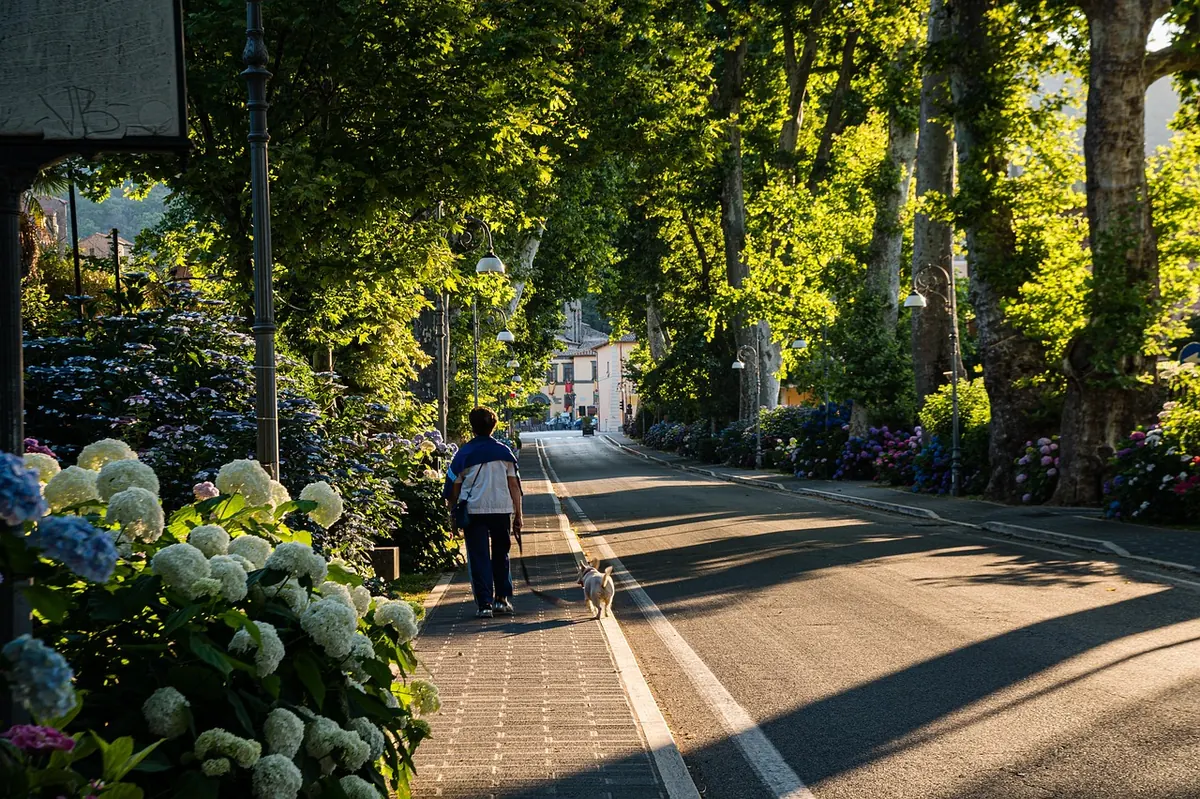
Leaving the car parked at Salotto Della Sorgente is not a limitation; it is a chance to see the area at the pace it was built for. The nearest village square, the morning market, the path to a viewpoint — these are often closer than they look on a map. A bakery that seems remote on a screen may be a fifteen-minute lane walk from the gate, while a town that looks near may sit on the far side of a road with no shoulder. The trick is to choose one direction for the day, check the return times before you set off, and let your host fill in the local details that timetables leave out. What follows is a practical way to plan walks, shuttles and taxis from the property, whether you have a single afternoon or a full week.
Walking: The First Radius
Start with what you can reach on foot. Your host can mark the safe walking routes on a paper map: the lane to the nearest village, the footpath that avoids the main road, the shortest way to a bakery or café. Ask specifically which stretches have a pavement, which are steep, and which are unlit after dark. A ten-minute walk to the nearest square is not the same as a two-kilometre road walk with no shoulder. In this kind of countryside, the difference between a pleasant stroll and a stressful one is often a single blind bend or a missing verge, so get those details before you set out.
What is genuinely walkable
A useful rule is to keep the first walk under thirty minutes each way and save the longer routes for after you know the area. Wear shoes you would happily walk in for an hour, carry water, and download an offline map before you leave. If you are walking at dusk, take a torch or use your phone light and tell someone at the property where you are going. In rural areas, footpaths can be overgrown or diverted; if a gate looks private, it probably is. A path that is clear in morning light can feel very different after dinner, especially where there are no streetlights and the road narrows between stone walls.
Make the walk a route, not a wander
Pick a destination — a village square, a church, a viewpoint, a market — rather than simply walking out and back. That gives you a reason to keep going and a clear point to turn around. On the way, note the landmarks you will need on the return: the fork by the stone wall, the bus stop opposite the bar, the name of the street where you turned. If you are unsure, ask the first person you pass; local directions are usually more current than any map. A good short route might be: lane to the village, coffee in the square, a look inside the church, then back by the lower road past the bakery. Write it down or photograph the map with your host’s marks on it.
The Local Shuttle or Bus, Used Properly
Many hospitality venues in this kind of area sit between villages, and the local bus or shuttle is the workhorse of car-free travel. Salotto Della Sorgente can confirm whether a shuttle runs during your stay, where it stops, and whether it needs booking. If there is a public bus, ask for the timetable in printed form and take a photo of it. Timetables change with the season and with school terms, so check the day you plan to travel. A bus that runs three times a day in summer may run once on a winter Saturday, and not at all on a Sunday.
Before you leave
- Confirm the stop: ask whether it is the one at the village square, the junction, or the road below the property.
- Buy tickets in advance if the bus does not sell them on board; in many Italian towns, tabacchi and newsagents sell local tickets.
- Check the last return time, not just the next departure. A late afternoon bus can be the only one back.
- Ask whether the stop is request-only; if so, signal clearly to the driver.
- Check whether the bus runs on Sundays, holidays or market days, when the timetable may be different.
On board, validate your ticket if the machine asks for it, and keep it until you leave. If the timetable is thin, plan around one outbound and one return trip rather than trying to fit in three villages. A single market town with a café, a church and a short walk is usually a better day than a rushed circuit of stops. Set an alarm for the return bus — twenty minutes before it leaves is not too early if you are unfamiliar with the walk to the stop.
Taxis and Pre-Booked Transfers
Taxis are the flexible option, but they are not always waiting at the rank. Ask your host for the local taxi number, save it in your phone, and book ahead for anything time-sensitive: a market morning, a dinner in the next village, a train connection. If you are using a taxi for a return trip, agree the pickup time and the exact meeting point before you leave. “Outside the church” is better than “in the village”, and “the bar on the corner of the square” is better still. Ask whether the driver prefers cash or card; many rural taxis are cash-only.
When a taxi is the right call
Use a taxi when the walk would leave you on an unlit road after dark, when you are carrying market shopping, or when the bus would force a three-hour wait. For longer trips, ask whether a pre-booked transfer is available and whether the driver can wait. If you are sharing with other guests, agree the split before you set off; it avoids awkwardness later. Do not assume ride-hailing apps cover rural areas — in many small towns they do not. A ten-euro shared taxi can be better value than a long, anxious walk with bags.
Plan Around Market Days and Village Rhythms
Weekly markets are one of the best reasons to leave the car behind, but they follow local rhythms. Ask your host which day the nearest market runs, what time it starts packing up, and whether the village is better reached by bus or on foot. Go early if you want the full selection; go later if you want fewer crowds and are happy with what is left. Take a sturdy bag, some small change and a bottle of water, and check whether the stalls prefer cash. If you buy more than you can comfortably carry, a taxi back is not a defeat — it is part of the plan.
Bicycles and E-Bikes: A Middle Option
If the roads are quiet and the distances are just beyond walking, ask whether bicycles or e-bikes can be rented nearby. An e-bike can turn a hilly five-kilometre trip into a comfortable outing, but it still needs planning. Ask your host about the terrain, the traffic on the main road, and whether helmets, lights and locks are included. In many rural areas, bike rental is seasonal, so confirm availability before you build a day around it.
Before you ride
- Check the brakes, lights and lock before you leave the rental point.
- Ask for a route on quiet lanes rather than the fastest road on the map.
- Carry water, a charged phone and a plan for returning before dark.
- Confirm where you can leave the bike safely while you visit a village or market.
Putting It Together: A Sample Car-Free Day
A simple day might start with a short walk to the bakery, a mid-morning bus to the nearest market town, lunch in the square, and a return bus in the early afternoon. That leaves the evening free for a local walk or a booked taxi to dinner. The key is to anchor the day around one firm commitment — a market, a bus, a reservation — and keep the rest flexible. Check the return times in the morning, not when you are already tired, and tell your host roughly when you expect to be back.
The best car-free days are built around one firm commitment — a market, a bus, a dinner — and leave the rest loose.
If the weather turns or the timetable fails, you have a fallback: the taxi number saved in your phone, the shorter walk you already know, or an afternoon at the property. That is not a wasted day; it is the advantage of travelling without a car. You notice the lanes, the village rhythms and the small places that drivers pass by.
Photo: MARTINOPHUC / Pixabay